
Reviewed · LARCO MUSEUM & HUACAS
Lima: Larco Museum Entry Ticket
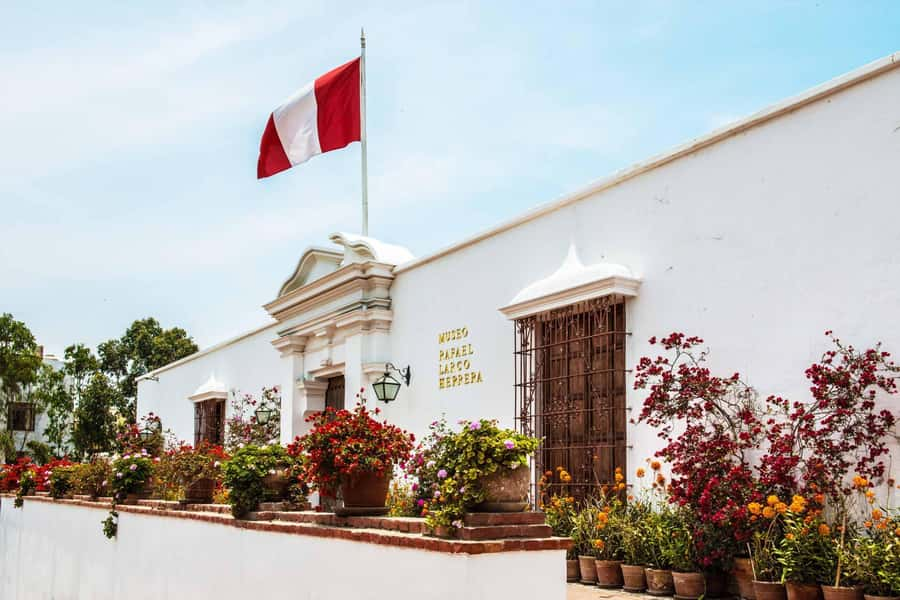
Ancient art, in a former vice-royal mansion. The Larco Museum turns Peru’s past into something you can walk through, inside an 18th-century vice-royal mansion with garden views. I really like the scale—45,000 pieces laid out with enough context to make it feel understandable—and I especially enjoy the way Moche pottery and other everyday scenes help you picture daily life long ago. One possible drawback: the museum’s pre-Columbian erotic art galleries are not shy, so only you can judge what feels comfortable.
With a 2-hour ticket, you can cover the main highlights without burning your whole day in Lima’s traffic. You also get skip-the-ticket-line entry, plus a peaceful break in the gardens if the art starts to feel like too much of a good thing.
In This Review
- Key points worth knowing before you go
- Larco Museum in Lima: why this ticket is worth your time
- Inside the vice-royal mansion: how to pace your 2 hours
- A note on comfort and focus
- What you’ll see: 45,000 artifacts across Peru’s pre-Columbian cultures
- Moche pottery: the best storytelling per minute
- Gold, silver, and metalwork: why these pieces hit harder in person
- What to look for
- Textiles you can actually appreciate: the weaving skill behind the colors
- Pre-Columbian erotic art: how to approach it respectfully
- Gardens and the outside mood: a small luxury in the middle of art time
- Price and value for a $25 ticket in Lima
- Practical info: tickets, entry, and what to bring
- Where to enter and what to show
- What to bring
- What not to bring
- Food and drinks
- Should you book the Larco Museum ticket?
- FAQ
- How long is the Larco Museum entry ticket?
- How much does the Larco Museum entry ticket cost?
- Where should I enter the museum?
- What do I need to show at entry?
- Do I need to bring an ID?
- Are large bags or luggage allowed?
- Is food included with the ticket?
- Is there a skip-the-line option?
- What’s the cancellation policy?
Key points worth knowing before you go
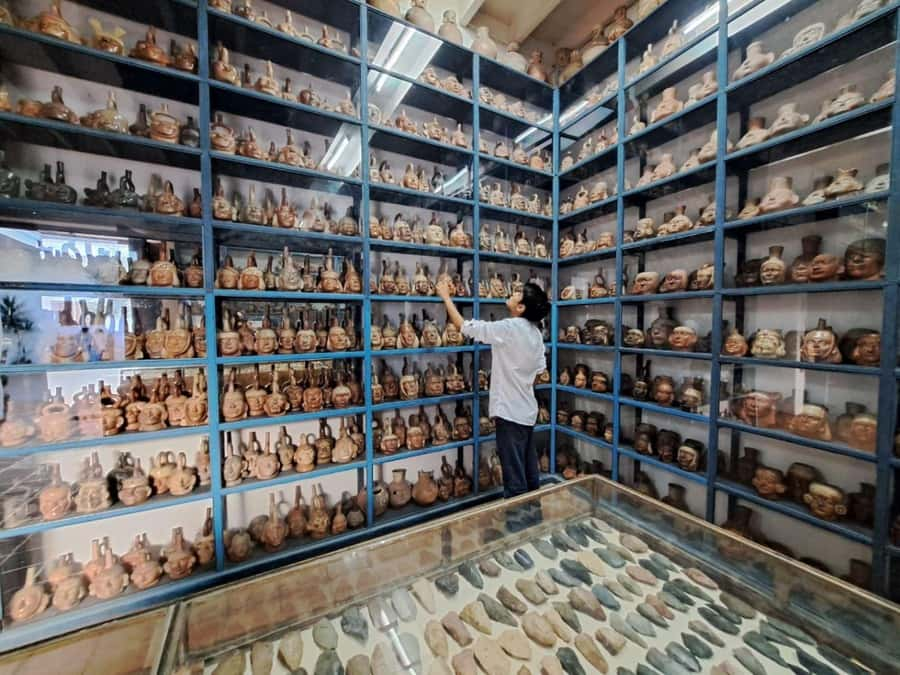
- 45,000 artifacts: a big collection, but planned so you can still finish in about 2 hours
- Moche pottery that tells stories: detailed scenes from daily life and ceremony
- Gold and silver craftsmanship: jewelry and ceremonial objects with impressive metallurgical work
- Textiles with color and fine detail: weaving traditions you can actually take time with
- Galleries of pre-Columbian erotic art: historically framed, but directly portrayed
- Gardens outside the galleries: a calm reset when you need a breather
Larco Museum in Lima: why this ticket is worth your time
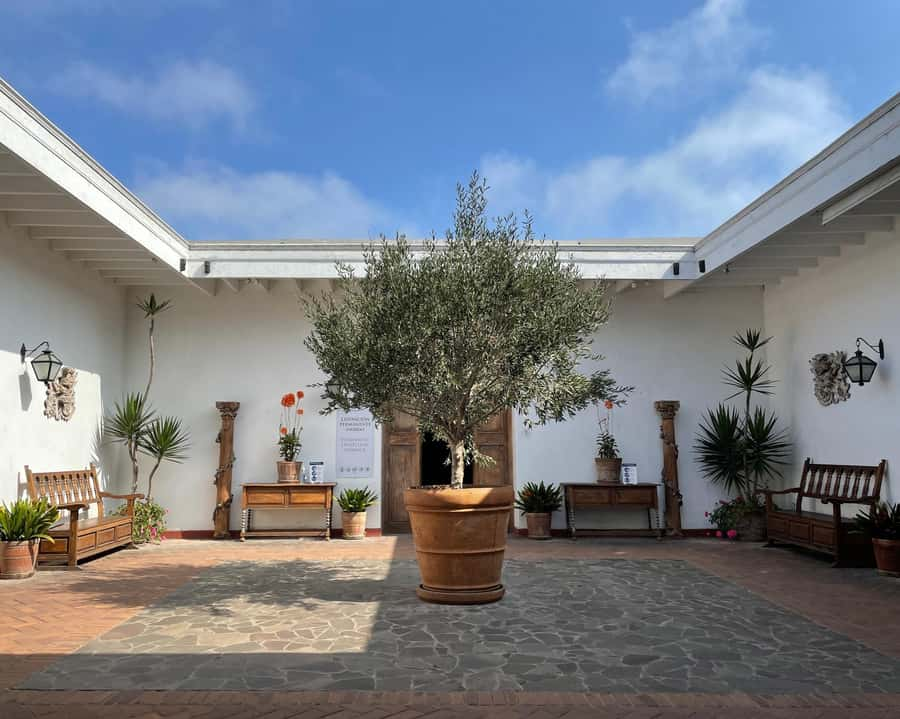
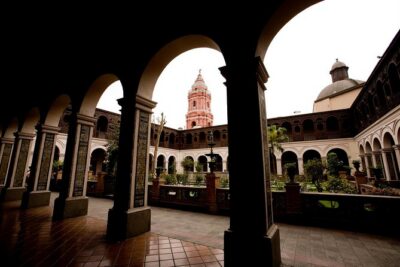
If you only have a small window in Lima, the Larco Museum is a smart choice. The museum is housed in a restored 18th-century vice-royal mansion, so the building itself adds context: you’re not just looking at objects, you’re inside a space that reflects Lima’s colonial story alongside Peru’s pre-Columbian cultures.
The biggest reason I think this experience works for most people is the variety. You’re not stuck in one theme. You can move from pottery scenes (including the often-provocative Moche style) to metalwork and jewelry, then to textiles where you can see how careful and time-consuming weaving really was. It’s a one-ticket way to understand how different cultures used art for status, religion, and communication.
Now, the museum isn’t trying to make everything “easy.” The erotic art galleries are part of the program, with symbolic and cultural context provided. If you’re the kind of visitor who gets uneasy by direct imagery, go in with that knowledge and set your own pace.
More Larco Museum and huaca visits




Inside the vice-royal mansion: how to pace your 2 hours
This entry ticket is designed for a 2-hour visit. That’s a good length if you want real looking time, but you don’t want to be stuck deciding whether you’re still “on schedule” in the middle of a gallery.
Here’s a practical pacing approach that usually helps in museums like this:
- Start strong in the main galleries
Go early to the key displays so you’re not rushing later. With 45,000 artifacts in the overall collection, the museum can feel huge on paper. In practice, the displays you’ll see are the ones that guide you through major themes.
- Scan, then slow down
For each room, I’d do a quick pass first to get the layout. Then pick 2–3 favorite rooms to linger in. The textiles and metalwork are where your eyes will want more time.
- Save a calm moment for outside
The museum gardens are a real plus. They give you a place to step away from artifacts and reset before you head back in—or finish your visit.
A note on comfort and focus
The museum has a lot of details. Some galleries can feel intense in subject matter and visual density. If you’re prone to sensory overload, don’t try to “speed-run” everything. Pick your priorities and let the rest be background learning.
What you’ll see: 45,000 artifacts across Peru’s pre-Columbian cultures
The headline number is big for a reason: the Larco Museum has over 45,000 pieces, representing different cultures and time periods. That matters because Peru’s pre-Columbian story isn’t a single straight line. It’s many societies with distinct styles, materials, and symbolism.
In a two-hour visit, you won’t see every item. But you should come away with a clear sense of what changes across regions and eras: materials vary (pottery, textiles, metals), and so does the way artists chose to show daily life, ritual, power, and beliefs.
What I like about this setup is that the museum doesn’t just drop objects on display. It provides explanations and contextual information, so you’re not left guessing what you’re looking at. That turns a “look and move on” visit into a “I get why this matters” visit.
A handful more Lima tours and tastings to fold into the week
- Lima: Larco Museum Entry Ticket & Guided Tour with Pickup★ 4.9 · 23 reviews
- City Tour Colonial and Modern Lima Half Day Plus Ticket★ 5.0 · 6 reviews
- Lima: Magic Water Circuit Tour w/ Transfer & Ticket★ 4.6 · 4 reviews
Moche pottery: the best storytelling per minute
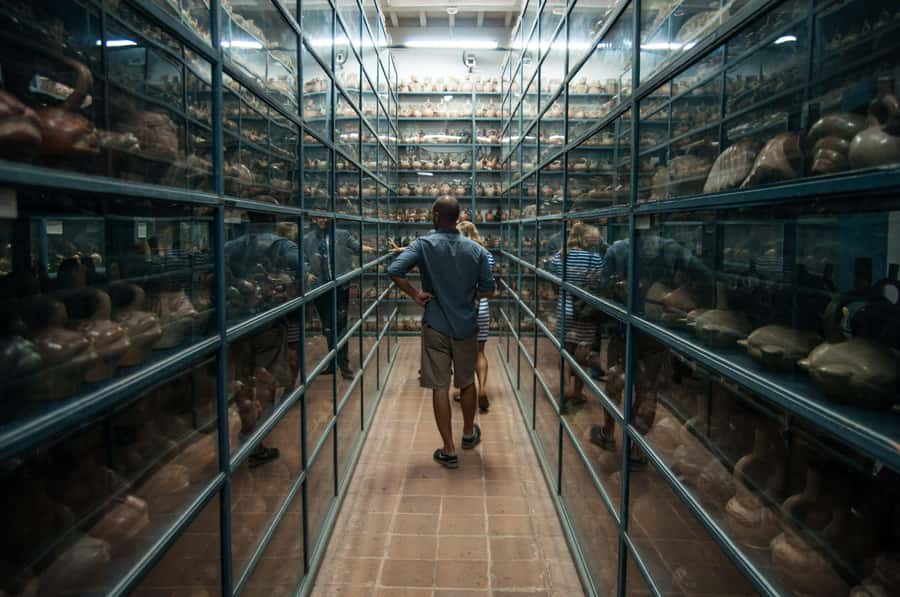
Moche pottery is one of the museum’s major draws. If you like art that feels like it comes from real people, you’ll probably love this part. The Moche tradition is known for intricate ceramics, often showing daily life and ceremonial practices.
The practical way to experience it: look for recurring details. Clothing patterns, gestures, and scenes that repeat across pieces can help you connect the dots fast. Even if you don’t know the names of everything, the human scenes do the teaching.
The slightly humorous truth is that some pottery scenes can make you pause and double-check what you’re seeing. That’s part of the point—art was used to communicate more than decoration. It recorded meaning, status, and belief.
Gold, silver, and metalwork: why these pieces hit harder in person
Gold and silver artifacts are another standout. The museum displays elaborate jewelry and ceremonial objects that show serious technical ability—especially impressive given the era.
When you’re viewing metalwork in real life, the details are different from photos. Edges, surfaces, and the way light catches the objects all matter. If you’re the type who enjoys craftsmanship, this is where you’ll feel your attention slow down naturally.
What to look for
Even with limited time, you can get something real out of this section:
- focus on the shapes and how parts connect
- check for repeated design themes (often linked to symbolism)
- notice how ceremonial objects differ from wearable pieces
Textiles you can actually appreciate: the weaving skill behind the colors
Pre-Columbian textiles are often where visitors say they didn’t expect to spend so long. Here, you’ll see an impressive selection of textiles that highlight intricate craftsmanship and vibrant colors.
Textiles can be hard to photograph well, which is why it helps to see them in person. The fine work is easier to understand when you can look closely and move at your own speed.
If you’re trying to squeeze the value out of a 2-hour ticket, don’t just glance at the textiles. Stop for one solid room-length look and you’ll likely come away with more appreciation than you’d expect.
Pre-Columbian erotic art: how to approach it respectfully
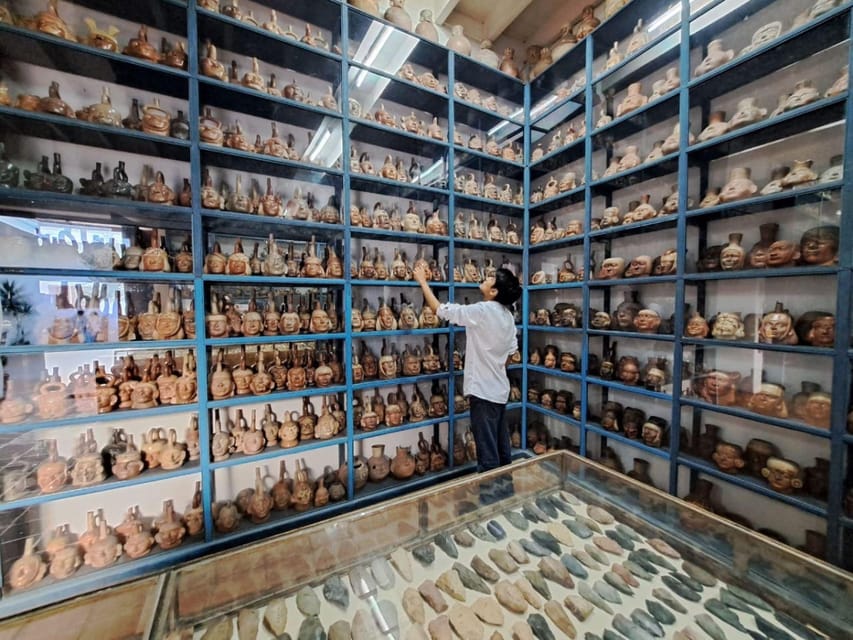
One of the Larco Museum’s best-known features is its collection of pre-Columbian erotic art. The museum frames it with explanations about symbolic and cultural significance, so it isn’t presented as shock value.
Still, the subject matter is direct. That’s the main consideration. If you’re traveling with kids, a conservative group, or simply know you prefer to avoid explicit imagery, you’ll want to decide ahead of time whether you’ll view these galleries.
A respectful way to handle it is to treat it like an artifact category with historical meaning—not like entertainment. Ask yourself what the symbolism might be saying in that culture. If it feels too intense, you’re not required to force it. The rest of the museum is strong enough to feel complete even if you skip those rooms.
Gardens and the outside mood: a small luxury in the middle of art time
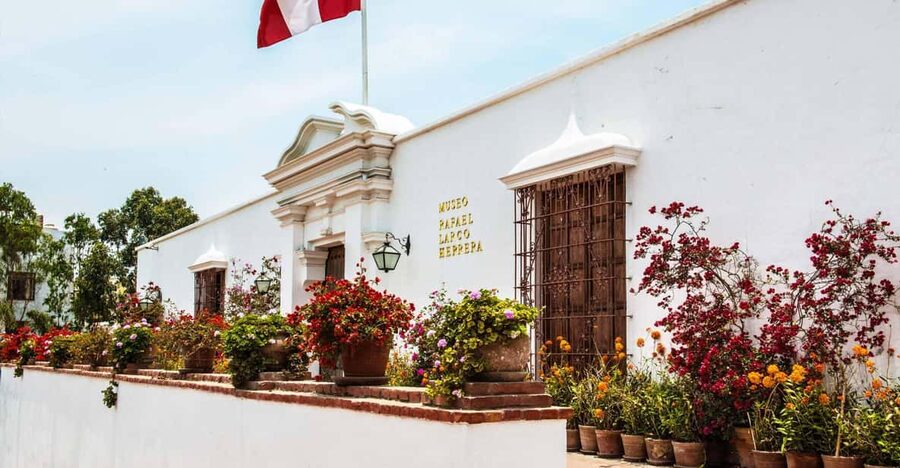
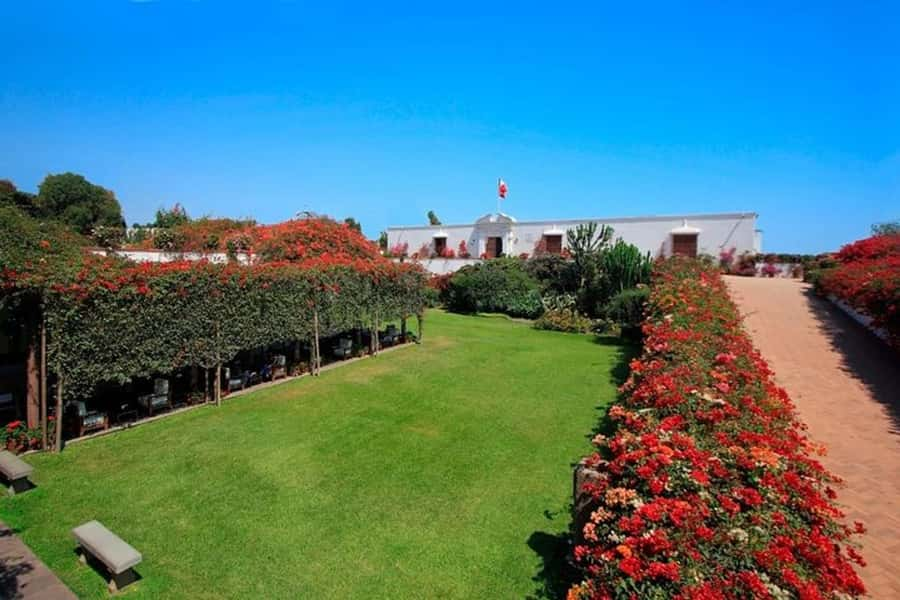
Don’t underestimate the gardens. One review noted the museum is beautiful both inside and outside, with colors, flowers, and a small attached restaurant. That matches what I think works here: after a dense period of gallery viewing, the gardens help you come down from the intensity.
It’s also useful in a practical way. If you’re with someone who gets tired faster than you do, the gardens are an easy compromise. You can step out, reset, then go back in without the visit feeling like a constant grind.
Price and value for a $25 ticket in Lima
At $25 per person for entry, this is a paid museum experience, not a quick freebie. So the value question is: what do you get for your money?
You’re paying for three things that are hard to replicate elsewhere:
- Scale and variety: 45,000 artifacts means you’re covering multiple art categories in one stop
- A strong focus on key media: pottery, gold/silver, and textiles are major highlights
- A real “place” to visit: the 18th-century mansion plus gardens makes the museum part of the experience
The ticket also includes skip-the-ticket-line entry, which matters in Lima when you’d rather spend your limited time looking than waiting.
If your travel style is museums plus a bit of wandering, this ticket is a fair deal. If you hate structured viewing and prefer only the very smallest number of exhibits, you might find it a bit much. The good news is that you can choose your pace—2 hours is enough to see the best parts without exhausting yourself.
Practical info: tickets, entry, and what to bring
Here’s how to make this smooth from the start.
Where to enter and what to show
Enter through the main gate. You’ll need to show the ticket sent to you by email the day before. The GetYourGuide voucher isn’t valid for entry by itself, so don’t rely on a screenshot or generic confirmation.
What to bring
Bring passport or an ID card.
What not to bring
No luggage or large bags. If you’re traveling with a daypack, you’ll likely be fine, but keep it small to avoid last-minute stress.
Food and drinks
Food and drinks are not included in your museum ticket. That said, there’s a small restaurant attached, which gives you an easy option if you’re hungry after the galleries.
Should you book the Larco Museum ticket?
I’d book it if you want one Lima stop that covers a lot of pre-Columbian art categories in a short time. The combination of Moche pottery, gold and silver craftsmanship, and textiles gives you strong visual variety, and the mansion + gardens make the museum feel like a proper outing rather than a hallway stop.
Skip booking or think twice if:
- you’re strongly uncomfortable with explicit erotic imagery
- you want only a very light, brief museum touch (2 hours can still be a lot if you don’t like looking closely)
- you can’t travel with the kind of bag policy many museums require
FAQ
How long is the Larco Museum entry ticket?
The ticket is listed for a 2-hour visit.
How much does the Larco Museum entry ticket cost?
The price is $25 per person.
Where should I enter the museum?
Enter through the main gate and show your entry ticket.
What do I need to show at entry?
You need to show the entry ticket sent to you by email.
Do I need to bring an ID?
Yes—bring your passport or ID card.
Are large bags or luggage allowed?
No—luggage or large bags are not allowed.
Is food included with the ticket?
No—food and drinks are not included.
Is there a skip-the-line option?
Yes, skip the ticket line is included.
What’s the cancellation policy?
You can cancel up to 24 hours in advance for a full refund.
More Tickets in Lima
- Lima: Larco Museum Entry Ticket & Guided Tour with Pickup
★ 4.9 · 23 reviews - City Tour Colonial and Modern Lima Half Day Plus Ticket
★ 5.0 · 6 reviews - Lima: Magic Water Circuit Tour w/ Transfer & Ticket
★ 4.6 · 4 reviews
More Tour Reviews in Lima
- Lima: Ultimate Peruvian Food Tour
★ 4.9 · 700 reviews - Full Day Paracas Ica and Huacachina from Lima All Included
★ 4.5 · 623 reviews - Lima’s Vibrant Heritage: Exploring the City’s Landmarks Half-day
★ 4.5 · 581 reviews - From Lima: Day trip to Paracas, Ica and Oasis Huacachina
★ 4.6 · 409 reviews - Private transfers from Lima Airport or to Lima Airport
★ 4.0 · 359 reviews
More Museums and Huacas
- Lima: The Charm of Barranco & Pre Inca Pyramid in Miraflores
★ 4.9 · 322 reviews - Pre Inca Temple of Pachacamac Half-Day Tour from Lima
★ 4.5 · 283 reviews - Lima Bike Tour Miraflores – Barranco + Huaca Pucllana!
★ 4.5 · 137 reviews - Larco Museum, Pisco Old Tavern and Magic Water Circuit Evening Tour
★ 4.5 · 66 reviews - Pachacamac’s Inka Pyramids Tour including Museum Small-Group
★ 5.0 · 65 reviews
Fresh from our Lima notebook, a few recent write-ups



Larco Museum & Huacas, compared.
 ★ 4.9The Charm of Barranco & Pre Inca Pyramid in MirafloresFrom $29322 reviews
 ★ 4.5Pre Inca Temple of Pachacamac Half-Day Tour from LimaFrom $79283 reviews
 ★ 4.5Lima Bike Tour Miraflores – Barranco + Huaca Pucllana!From $30137 reviews
 ★ 4.5Larco Museum, Pisco Old Tavern and Magic Water Circuit Evening TourFrom $7566 reviews
 ★ 5.0Pachacamac’s Inka Pyramids Tour including Museum Small-GroupFrom $5265 reviews
 ★ 4.5Lima in a Day: City Sightseeing Tour, Larco Museum and Magic Water CircuitFrom $25763 reviews
 ★ 5.0Lima´s Vibrant Heritage & Larco Museum of Cultures Half Day TourFrom $6948 reviews
 ★ 4.8Pachacamac Inka Pyramids & The Larco Museum TourFrom $7843 reviews
Browse the lists this tour appears in