
Reviewed · LARCO MUSEUM & HUACAS
Lima: Tour to Huaca Pucllana and Huaca Mateo Salado
There’s something cool about Lima keeping secrets in plain sight. This 4-hour tour takes you from Huaca Pucllana in Miraflores to Huaca Mateo Salado in Pueblo Libre, with an on-the-ground guide who helps you read what you’re seeing. I like that it’s compact, so you get two major sites without burning a whole day.
What I like most is the chance to see a 25-meter adobe pyramid up close at Huaca Pucllana, plus the visit includes an exhibition hall where the story feels organized instead of random.
One thing to consider: there’s no food or drinks included, so you may want to plan water and a light snack before or after. Also, bring basics like sunscreen since you’ll be outside at both sites.
In This Review
- Key highlights you’ll feel right away
- Lima in a hurry: why this 4-hour combo works
- Pickup, timing, and the small details that matter
- Huaca Pucllana: the Miraflores adobe pyramid you can’t unsee
- Huaca Mateo Salado: Ychsma-era structure with an Inca afterlife
- The bigger story: how Lima, Ychsma, and the Incas connect
- Guide-led visits: why the language choice matters
- Price and value: is $217 per person reasonable?
- Who this tour suits (and who might skip it)
- My call: should you book this Huaca Pucllana and Mateo Salado tour?
- FAQ
- How long is the Lima tour to Huaca Pucllana and Huaca Mateo Salado?
- Where do you pick up from in Lima?
- Which archaeological sites are included?
- What languages is the guide available in?
- Are entrance tickets included?
- Is food or drinks included in the tour price?
- Is this a private group tour?
- What should I bring for the tour?
- Can I cancel or reserve without paying today?
Key highlights you’ll feel right away
- Miraflores to Pueblo Libre in one guided loop with hotel pickup and drop-off options
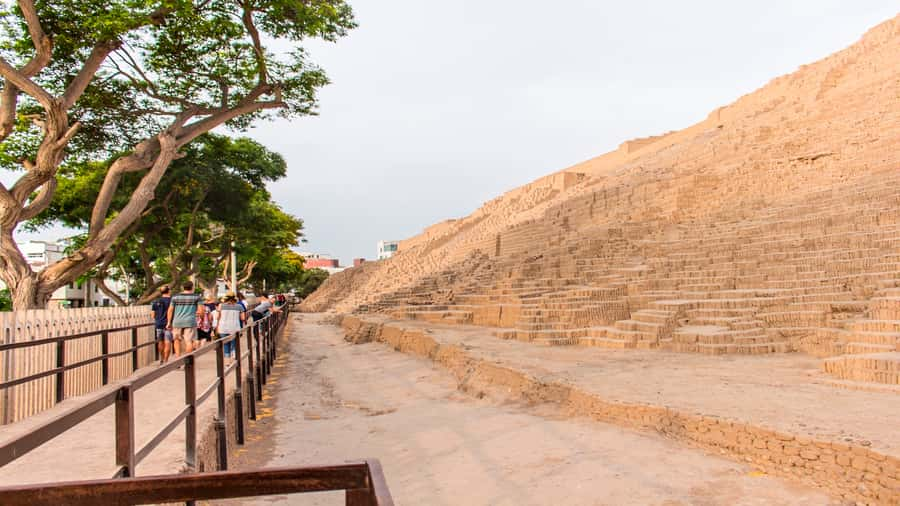
- Huaca Pucllana’s 25-meter truncated adobe pyramid plus courtyards, squares, and an exhibition hall
- Mateo Salado’s truncated pyramid and ceremonial plaza tied to Ychsma-era Lima-region traditions
- A professional guide in English, Spanish, and Portuguese so the explanations stay clear
- Tickets to both sites included, so you’re not scrambling at the door
Lima in a hurry: why this 4-hour combo works
If you only have a short window in Lima, this tour is built for efficiency without making the stops feel rushed. You’ll get a pickup from Barranco, San Isidro, or Miraflores, then head straight into Lima’s archaeological core. The van ride times are reasonable (about 15 minutes before the first site, 30 minutes between sites, and 25 minutes back), so you’re spending most of the clock on the ground where the huacas are.
The big value here is pairing two different places that both belong to Lima’s pre-Columbian story, but in different ways. Huaca Pucllana is tied to the Lima culture and its ceremonial-administrative role. Mateo Salado connects to the Middle Horizon era, then later gets reused by the Incas as part of a wider network that points toward Pachacamac. You’re not just seeing ruins. You’re seeing continuity, repurposing, and how the region layered meaning over centuries.
And there’s a practical plus: you get a private group experience with an official guide. That often matters in Lima, where explanations can make or break ruins visits. With a guide, you’re less likely to feel like you’re standing in front of shapes and guessing.
More Larco Museum and huaca visits




Pickup, timing, and the small details that matter
The tour is designed around three pickup zones: Barranco, San Isidro, and Miraflores. That’s helpful because those areas are where most visitors stay, and it keeps your morning or afternoon from turning into a logistics problem.
You’ll move by van, and the stop lengths are clear. You’ll spend about 80 minutes at Huaca Pucllana and about 1.5 hours at Huaca Mateo Salado. That’s long enough to walk the complex with context, but short enough to keep the energy up.
Bring your passport (required on the tour), plus sunglasses and sunscreen. Comfortable clothes are smart because Lima’s coastal sun can surprise you, even when the day feels mild.
Finally, remember the tour doesn’t include food or drinks. If you’re prone to getting hungry after walking around outdoors, plan water and a snack either before pickup or after you’re dropped back.
Huaca Pucllana: the Miraflores adobe pyramid you can’t unsee
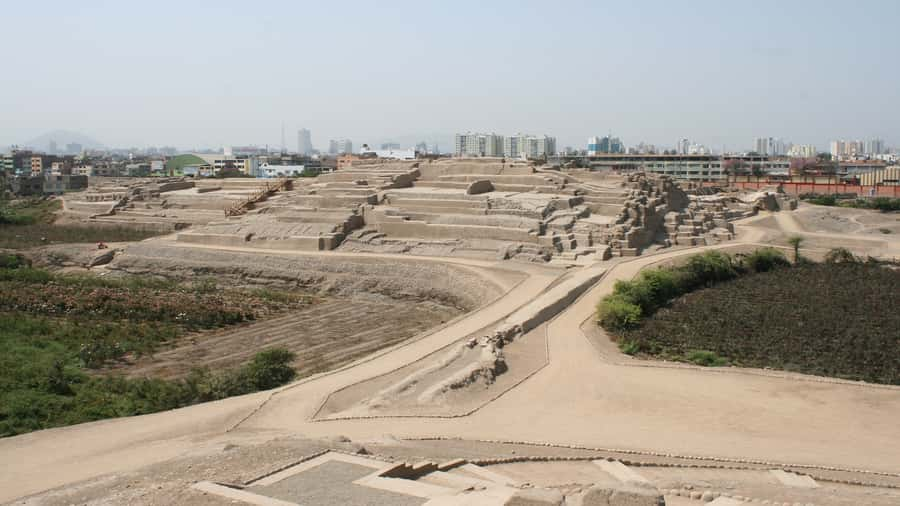
Huaca Pucllana sits right in Miraflores, which is part of what makes it such a mind-bender. You’re in a modern district, and then you’re suddenly in the presence of a ceremonial-administrative complex tied to the Lima culture (around 200 to 700 A.D.).
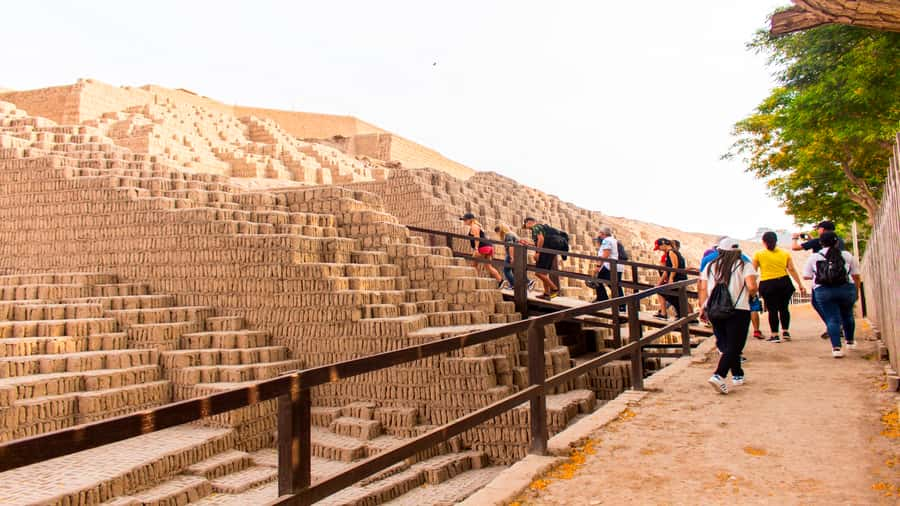
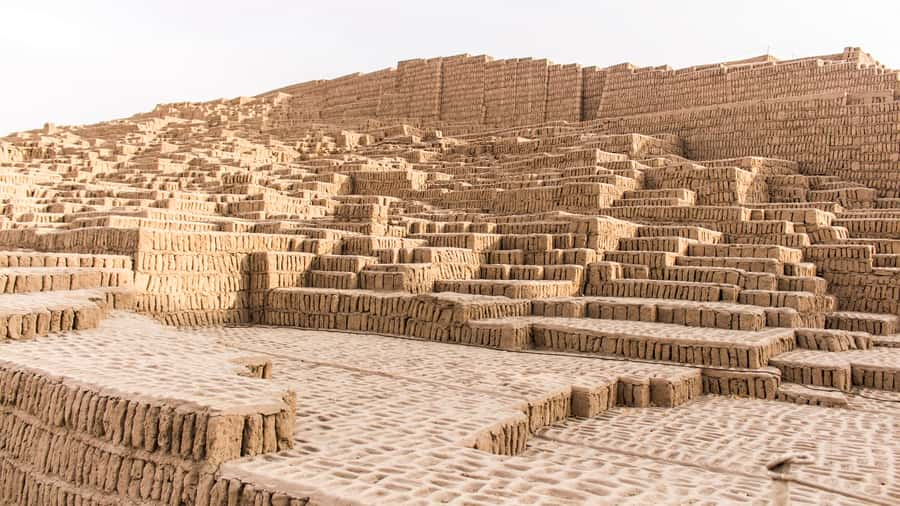
The main feature is the truncated adobe pyramid, rising to about 25 meters. Instead of being a full pyramid with a smooth rise, it’s cut down, but it still has that imposing, geometric weight. Standing there with a guide, you start noticing how the structure’s layout supports movement between spaces: courtyards, squares, and open areas where ceremonies would have made sense.
You’ll also visit an exhibition hall, which is a real difference-maker. Ruins can feel vague when you’re left to interpret alone. In an exhibition hall, you typically get the background you need to make sense of what you’re seeing in front of you. Even without going super technical, it helps you connect the dots: why the site mattered, what it may have been used for, and what Lima culture likely valued.
A fun detail to keep in your head: Huaca Pucllana was discovered in the 1980s during urbanization works in Lima. That context matters. It’s not a remote relic you found in a field. It’s a major cultural site that had to be protected while the city grew around it—so the restoration and excavation efforts you’re seeing today are tied directly to modern Lima’s development.
Who will like this stop most: people who want a “best first huaca” experience, because Pucllana has the famous shape, plus the exhibition hall adds clarity.
Possible drawback: because it’s inside a city district, you may notice the urban surroundings more than at an out-in-the-desert site. The tradeoff is convenience and the chance to understand the site’s relationship to Lima today.
Huaca Mateo Salado: Ychsma-era structure with an Inca afterlife
After Pucllana, you’ll transfer about 30 minutes to the Huaca Mateo Salado archaeological complex in Pueblo Libre. This stop has a different vibe. The focus is less on one iconic feature and more on how the complex functions as a ceremonial-administrative space.
Mateo Salado is estimated at around 1,400 years old and was built by the Lima people during the Middle Horizon period (600 to 900 A.D.). From there, the story takes an interesting turn: archaeologists and historians connect Mateo Salado to the Ychsma culture, and the Incas later reused it. That reuse matters because it shows how later powers didn’t erase everything. They adapted and connected older structures into new meanings.
One of the coolest links described for this site is its connection to the Qhapaq Ñan, known as the Inca Trail system that connected the Inca Empire. Mateo Salado was reused to help connect this huaca with Pachacamac, south of Lima. In other words, you’re standing at a place that mattered locally, then became part of a larger web.
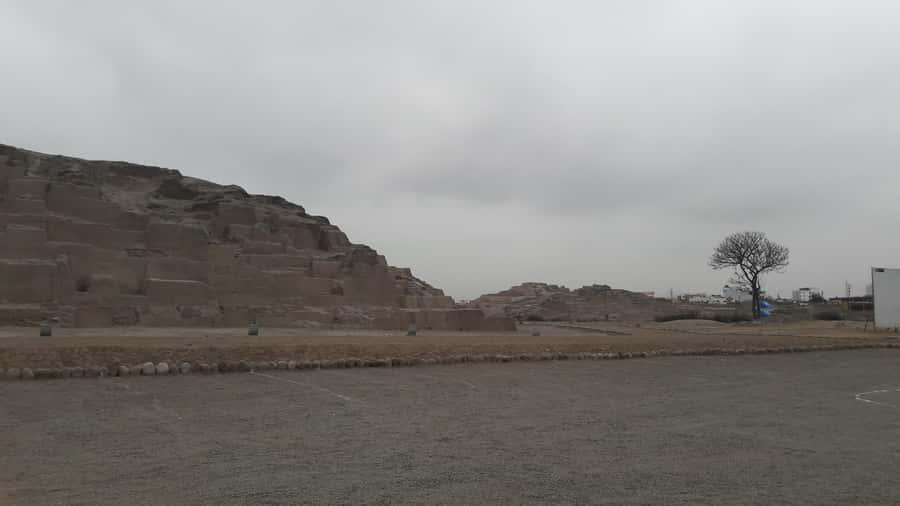
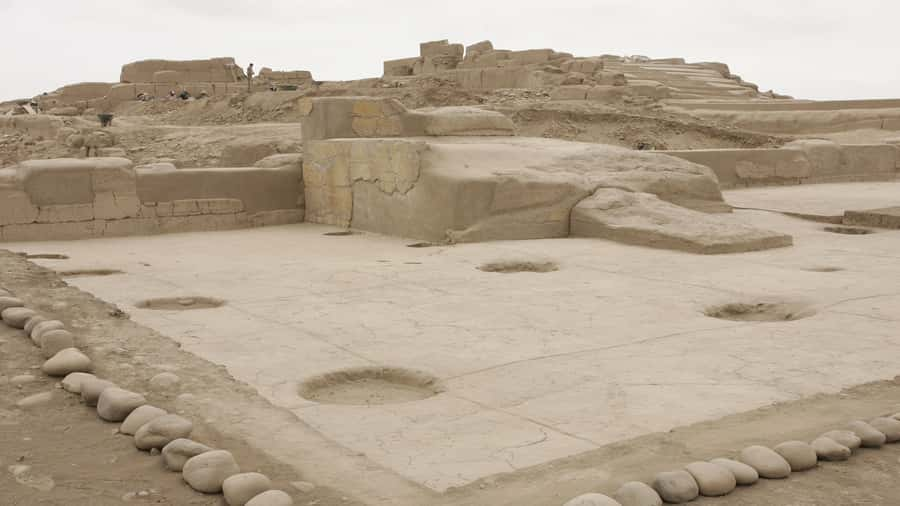
What you’ll see at Mateo Salado includes a truncated pyramid and a ceremonial plaza, plus auxiliary structures around them. The main pyramid was covered in adobe and decorated with reliefs and mural paintings showing human figures, animals, and deities linked to Lima mythology.
That decorative detail is where a guide really earns their place. If you’re only looking at stone and earth, it’s hard to imagine painted murals and reliefs. With interpretation, those surfaces stop being blank. You start to understand the complex as a decorated performance space, not just a shape.
Who will like this stop most: people who prefer a more story-heavy site, where the cultural “layers” are part of the appeal. If you like seeing how the Incas reused earlier places, this one hits.
Possible drawback: compared to Pucllana’s famous pyramid image, Mateo Salado may feel less instantly recognizable from photos. The payoff is in the guided explanation.
- Lima: Ultimate Peruvian Food Tour★ 4.9 · 700 reviews
- Full Day Paracas Ica and Huacachina from Lima All Included★ 4.5 · 623 reviews
- From Lima: Day trip to Paracas, Ica and Oasis Huacachina★ 4.6 · 409 reviews
- Private transfers from Lima Airport or to Lima Airport★ 4.0 · 359 reviews
The bigger story: how Lima, Ychsma, and the Incas connect
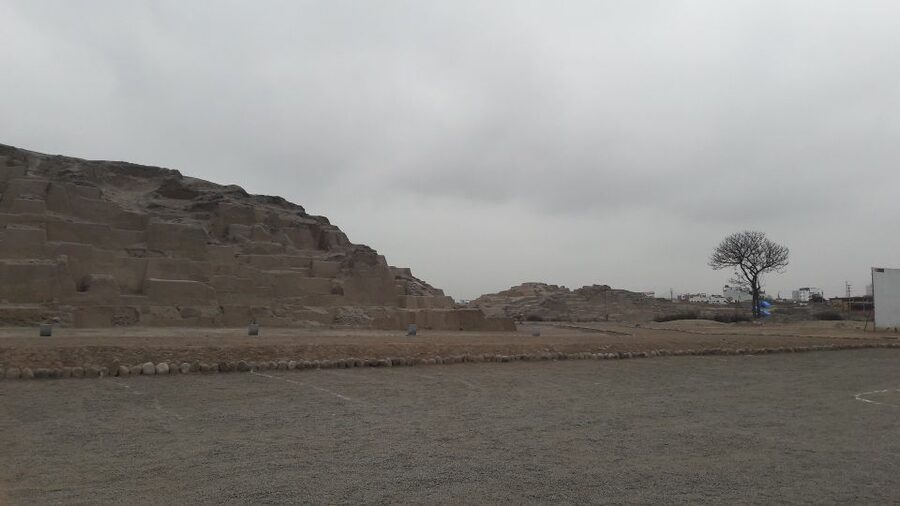
The two sites together create a strong timeline effect. Pucllana roots you in the Lima culture’s ceremonial-administrative world. Mateo Salado takes you into the Middle Horizon (600 to 900 A.D.) period, then adds the Ychsma angle and the later Inca reuse.
This is more than name-dropping. It helps you understand why you’re seeing truncated pyramids in different places. Truncated pyramids often relate to ceremony, gathering, and structured movement through space. When those spaces get reused, the architecture becomes a kind of bridge between eras.
The Qhapaq Ñan connection is also important. The Inca Trail is famous, but many visitors only think of it as a distant trek. This tour brings a smaller piece of that network context into Lima. Standing at Mateo Salado, you’re reminded that the Inca system wasn’t just roads through mountains. It was also about how they connected significant places across the region.
If you take one mental note from this tour, make it this: ruins in Lima aren’t isolated. They’re part of a layered regional system, where different cultures left marks and then others built on top.
Guide-led visits: why the language choice matters
This is an official guided tour, and the guide offers interpretation in English, Spanish, and Portuguese. That’s not a small detail. Archaeology can get technical fast, and a guide’s job is to translate what the complex meant in practical terms you can understand on-site.
In a city setting, guide guidance also helps you pace yourself. You’ll spend 80 minutes at Pucllana and 1.5 hours at Mateo Salado, which is a good chunk of time. With a guide, you’re less likely to rush or wander aimlessly. You know what to look for and why it matters.
I also appreciate that the experience includes tickets to both sites. That saves time and reduces stress, especially when you’re on a short schedule and trying to pack Lima in without headaches.
Price and value: is $217 per person reasonable?
At $217 per person for a 4-hour private-group experience, it’s not a bargain-basement deal. But it also isn’t a random price tag with nothing behind it.
You’re paying for:
- hotel pickup and drop-off in Barranco, San Isidro, and Miraflores
- a van transfer between the two huacas
- an official guide in multiple languages
- tickets to Huaca Pucllana and Mateo Salado
For many visitors, the value comes down to time and coordination. Lima archaeology can be spread out across districts, and doing it efficiently matters. When pickup is included and tickets are handled, your day stays simple.
This also looks good if you want a more tailored experience. Even though it’s described as private group, it’s still a structured tour with set stop times. That balance can feel worth it when you’re trying to maximize what you see without turning your trip into transportation math.
Who this tour suits (and who might skip it)
This tour is a strong fit if you:
- want two Lima-region archaeological sites in one afternoon
- like guided explanations rather than reading alone
- stay in Miraflores, San Isidro, or Barranco and want easy pickup
- want a short, manageable plan that fits into a packed itinerary
It may be less ideal if you:
- expect a full day of archaeology plus time for optional extras
- need a meal included mid-tour (food and drinks are not included)
- prefer very remote, off-the-grid ruin settings (Pucllana is in Miraflores, urban by nature)
Also note: the tour is suitable for all ages. That matters if you’re traveling with family and want a structured activity rather than a freeform exploration.
My call: should you book this Huaca Pucllana and Mateo Salado tour?
Yes, if you want Lima archaeology that makes sense fast. The pairing of Huaca Pucllana and Huaca Mateo Salado gives you two different ways of understanding Lima’s pre-Columbian world: one through the Lima culture ceremonial-administrative complex, and the other through a site with deeper layering into Ychsma traditions and Inca reuse tied toward Pachacamac.
I’d book it if:
- you want a guided visit with tickets handled
- you’re staying in the main pickup zones
- you’d rather spend your time learning than troubleshooting logistics
One last practical note: plan around the lack of food. If you show up hydrated and not hungry, you’ll get more out of every minute at both sites.
FAQ
How long is the Lima tour to Huaca Pucllana and Huaca Mateo Salado?
The tour lasts about 4 hours.
Where do you pick up from in Lima?
Pickup is available from hotels in Barranco, San Isidro, and Miraflores.
Which archaeological sites are included?
The tour visits Huaca Pucllana in Miraflores and Huaca Mateo Salado in Pueblo Libre.
What languages is the guide available in?
The official tour guide is available in English, Spanish, and Portuguese.
Are entrance tickets included?
Yes. Tickets to Huaca Pucllana and Mateo Salado are included.
Is food or drinks included in the tour price?
No. Food and drinks are not included.
Is this a private group tour?
Yes, it is listed as a private group experience.
What should I bring for the tour?
Bring your passport, sunglasses, sunscreen, and comfortable clothes.
Can I cancel or reserve without paying today?
You can cancel up to 24 hours in advance for a full refund, and you can reserve now & pay later (you pay nothing today).
More Tours in Lima
- Lima: Ultimate Peruvian Food Tour
★ 4.9 · 700 reviews - Lima: Paracas and the Huacachina Oasis Guided Day Tour
★ 4.5 · 354 reviews - Lima: Pachacamac Ruins & Barranco Half-Day Guided Tour
★ 4.6 · 296 reviews - Pre Inca Temple of Pachacamac Half-Day Tour from Lima
★ 4.5 · 283 reviews - Lima: Magic Water Circuit Light Show Tour with Pickup
★ 4.9 · 251 reviews
More Tour Reviews in Lima
- Lima: Ultimate Peruvian Food Tour
★ 4.9 · 700 reviews - Full Day Paracas Ica and Huacachina from Lima All Included
★ 4.5 · 623 reviews - Lima’s Vibrant Heritage: Exploring the City’s Landmarks Half-day
★ 4.5 · 581 reviews - From Lima: Day trip to Paracas, Ica and Oasis Huacachina
★ 4.6 · 409 reviews - Private transfers from Lima Airport or to Lima Airport
★ 4.0 · 359 reviews
More Museums and Huacas
- Lima: The Charm of Barranco & Pre Inca Pyramid in Miraflores
★ 4.9 · 322 reviews - Pre Inca Temple of Pachacamac Half-Day Tour from Lima
★ 4.5 · 283 reviews - Lima Bike Tour Miraflores – Barranco + Huaca Pucllana!
★ 4.5 · 137 reviews - Larco Museum, Pisco Old Tavern and Magic Water Circuit Evening Tour
★ 4.5 · 66 reviews - Pachacamac’s Inka Pyramids Tour including Museum Small-Group
★ 5.0 · 65 reviews
Fresh from our Lima notebook, a few recent write-ups

Larco Museum & Huacas, compared.
 ★ 4.9The Charm of Barranco & Pre Inca Pyramid in MirafloresFrom $29322 reviews
 ★ 4.5Pre Inca Temple of Pachacamac Half-Day Tour from LimaFrom $79283 reviews
 ★ 4.5Lima Bike Tour Miraflores – Barranco + Huaca Pucllana!From $30137 reviews
 ★ 4.5Larco Museum, Pisco Old Tavern and Magic Water Circuit Evening TourFrom $7566 reviews
 ★ 5.0Pachacamac’s Inka Pyramids Tour including Museum Small-GroupFrom $5265 reviews
 ★ 4.5Lima in a Day: City Sightseeing Tour, Larco Museum and Magic Water CircuitFrom $25763 reviews
 ★ 5.0Lima´s Vibrant Heritage & Larco Museum of Cultures Half Day TourFrom $6948 reviews
 ★ 4.8Pachacamac Inka Pyramids & The Larco Museum TourFrom $7843 reviews
Browse the lists this tour appears in