

Reviewed · LIMA CITY SIGHTSEEING TOURS
City Tour Panoramic Bus Departure from Larcomar
Lima feels like two cities at once. This 4-hour Turibus tour starts at cliffside Larcomar, then moves into the historic core for guided walking stops around Plaza de Armas, the cathedral area, and major government buildings. I especially like the way Larcomar’s design turns an overlook into something you can actually hang out in, and I also like the guided pace in the center where you get the big-picture story without getting lost. One thing to consider: Lima traffic can stretch travel time, and one review flagged that bus sound can be hard to hear if you’re not in the right spot.
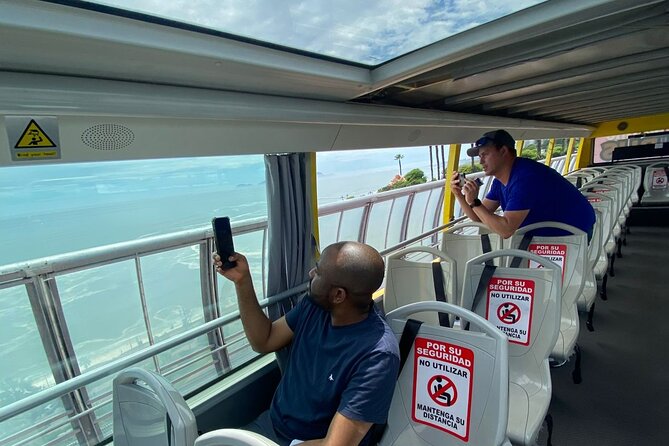
The tour price sits in the mid-range for Lima sightseeing, and the value comes from the mix of bus panoramas plus actual time on foot. You’ll get WiFi on board, air-conditioning, USB phone chargers, and guided time in the historic center that helps the landmarks click into place.
In This Review
- Key points worth knowing before you go
- Entering Lima from Larcomar: the cliff views and the “floating” terraces
- Stop 2: Pucllana Site Museum for a pre-Inka reset in Miraflores
- Plaza de Armas: the square that organizes the whole historic center
- Jirón de la Unión 300 and the Municipal Palace you can picture on a map
- Lima Cathedral: a cathedral with Inka roots under the foundation
- Government Palace of Peru: Peru’s executive power on Plaza Mayor
- How the bus and walking format really feels (and what to plan for)
- What’s included (and how to judge the $35 value)
- Guides, language, and group energy: why it matters on this route
- Weather and timing: the small factor that affects a big day
- Should you book this Lima panoramic bus tour from Larcomar?
- FAQ
- How long is the City Tour Panoramic Bus departing from Larcomar?
- How much does the tour cost?
- Where do I meet the tour?
- Is pickup included?
- What’s included in the price?
- What happens if the weather is bad?
Key points worth knowing before you go
- Larcomar’s cliffside setting: a shopping-and-leisure zone built over an excavation, with a floating feel and that striking bluish-glass chimney look.
- Real guided walking time in the historic center, not just a drive-by.
- Pucllana Site Museum brings in a pre-Inka perspective right in Miraflores.
- Plaza de Armas is the anchor stop, with key civic buildings ringing the square.
- Lima Cathedral and Government Palace context: you get the layered Inca-to-Spanish story tied to the same ground.
- Sound and timing can vary depending on seat position and traffic.
Entering Lima from Larcomar: the cliff views and the “floating” terraces
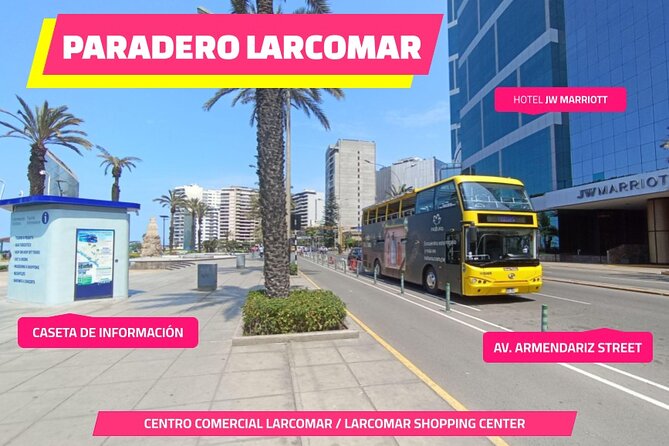
The meeting point is at Turibus in Larcomar, along Mal. de la Reserva in Miraflores. That matters because you start with one of the best introductions to Lima’s geography: the cliffs, the Pacific-side breezes, and the way Miraflores overlooks a big, spreading city.
Larcomar is built on an excavation at the top of the Lima cliff, and many parts feel like they hover over the void. You’ll see how the area was shaped in the Malecón de la Reserva sector, including what used to be Alfredo Salazar park. The design also includes ventilation exhaust chimneys that show up in the park as large bluish-glass sculptures, which makes Larcomar feel more engineered than random mall construction.
This is one of the places where a panoramic bus tour can actually feel worth it. Instead of staring out of a window at the same sky, you get a landmark that explains the setting. If you time your visit right, the light can make the blue-glass chimneys pop.
More Miraflores clifftops and Barranco corners



Stop 2: Pucllana Site Museum for a pre-Inka reset in Miraflores
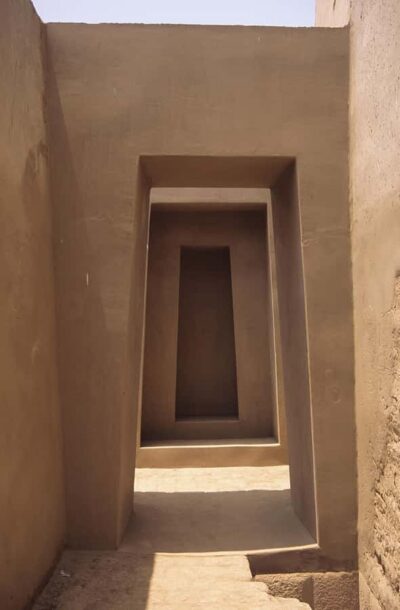
Pucllana Site Museum is your quick “reset” stop. It’s a Pre-Inka ceremonial center in Miraflores, so you’re not just moving through Lima’s colonial layout—you’re stepping into a longer timeline.
What I like about placing this stop in the middle of a city tour is the contrast. You’re still in a modern district, but the museum setting frames Miraflores as more than cliffs and cafes. This is the kind of stop that keeps the day from feeling like the same stone facades repeated in different fonts.
A practical note: this part is still within a tour format, so wear shoes that can handle museum paths and uneven surfaces. You won’t want to think about footwear once you’re standing around under Lima’s daylight.
Plaza de Armas: the square that organizes the whole historic center
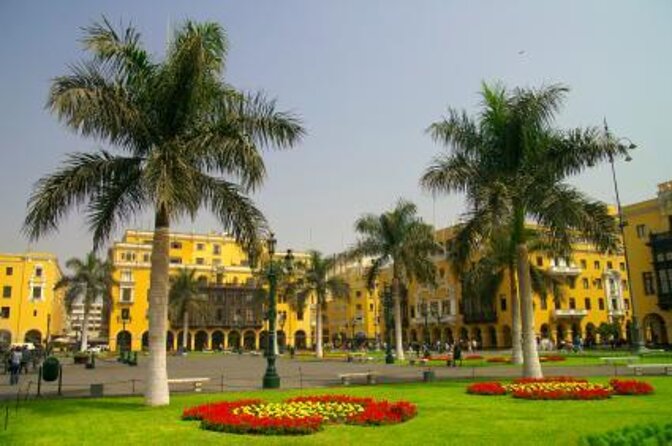
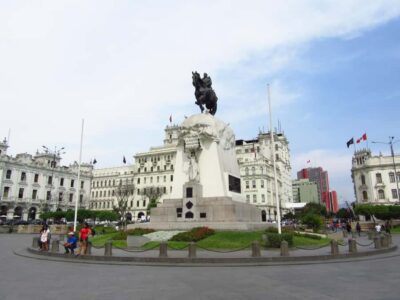
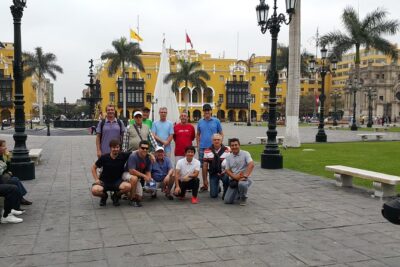
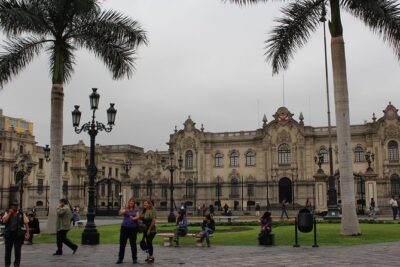
When the tour reaches Lima Main Square, also known as Plaza de Armas de Lima, it becomes clear why this stop is the heart of the route. The square is the foundational public space of Lima, set in the historic center, with the big institutions facing outward.
You’ll see the Government Palace of Peru, Lima Cathedral, the Church of the Sagrario, the Archbishop’s Palace of Lima, the Municipal Palace of Lima, and the Club de la Unión around the square. The geometry is part of the lesson: the plaza reflects a Hispanic urban layout, and it intersects with Jirón Junín, Jirón de la Unión, Jirón Huallaga, and Jirón Carabaya.
This is also where a guided format pays off. Without a guide, it’s easy to admire architecture but miss the “why it’s there” story. With guidance, you start to notice the relationships: which buildings face the square, how the power centers sit next to each other, and how the city’s layout channels movement.
Jirón de la Unión 300 and the Municipal Palace you can picture on a map

Next comes the municipal setting: Jirón de la Unión 300, where the Municipal Palace of Lima is located. The key detail is its orientation—it’s a public building facing the Main Square in the historic center.
Even if you don’t memorize addresses, this stop helps you understand the plaza as a system. The tour isn’t only pointing at individual monuments; it’s showing how civic life was designed to sit in a visible ring around Plaza Mayor.
If you like walking through places you can later recognize from photos, this is a good moment to pause, look up, and match streets to landmarks. Lima’s center rewards that simple habit.
More half-day spins around the capital
- Lima: City Highlights Small Group Tour★ 4.9 · 132 reviews
- City Tour Panoramic Bus Departure from Larcomar★ 5.0 · 97 reviews
- City Tour of Lima from the Airport★ 4.5 · 84 reviews
- Lima City Tour. Pre-Hispanic, Colonial and Modern Tour.★ 5.0 · 74 reviews
Lima Cathedral: a cathedral with Inka roots under the foundation
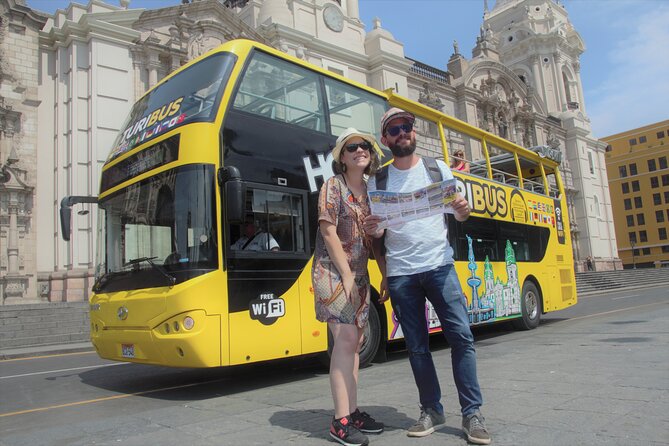
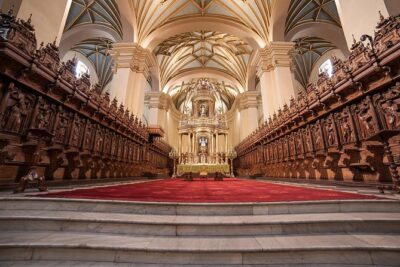
Lima Cathedral is one of the more fascinating stops on the whole circuit because it connects directly to the ground beneath it. The cathedral sits on a site tied to Inka structures: an Inca shrine of Puma Inti and the palace of the Cusco prince Sinchi Puma, a descendant of Inca Sinchi Roca.
When Francisco Pizarro founded Lima, he allocated the plot for the church and made sure it wasn’t treated as an illegal takeover. The text detail that matters here is the notarized certificate where Sinchi Puma renounced his assets, so the construction site wouldn’t be considered usurpation.
From there, you get dates and milestones that make the cathedral feel less like a photo background and more like a constructed event. Pizarro laid the foundation stone in 1535 and publicly carried the first beam for the church. It was completed in 1538 and inaugurated on March 11, 1540, with the consecration of the Holy Eucharist for the first time.
If you care about how conquest, religion, and politics overlap in real urban space, this stop is a must. It’s also the kind of place where a guide’s timing matters—standing in the right spot makes the building feel bigger and the story easier to follow.
Government Palace of Peru: Peru’s executive power on Plaza Mayor
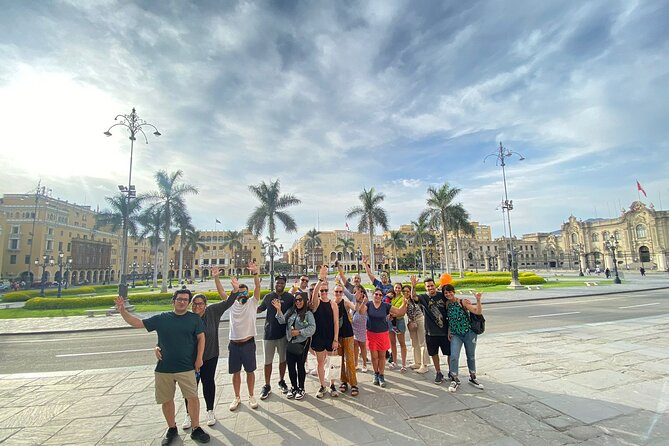
The tour closes the key historic-core story with the Government Palace of Peru (Casa de Gobierno / Casa de Pizarro). This is the main seat of the Peruvian executive power and the official residence of the president.
The building occupies 19,208 m² and sits in the Plaza Mayor on the left bank of the Rímac River. The interesting part is continuity: different structures have occupied the site for nearly five centuries, since Francisco Pizarro took over the location in 1535. Before that, the site may have been tied to the curaca Taulichusco, a delegate in the Inca government in the Rímac Valley.
During the Viceroyalty period, it served as the Palace of the Viceroy and housed the 40 viceroys of Peru. Later it became associated with liberators José de San Martín and Simón Bolívar, and then it housed many presidents through the republican era. You’re basically standing in one place and watching centuries stack on top of each other.
For value, this stop matters because it ties the entire plaza together. Plaza de Armas isn’t only “pretty old buildings.” It’s the physical map of who held power and when.
How the bus and walking format really feels (and what to plan for)
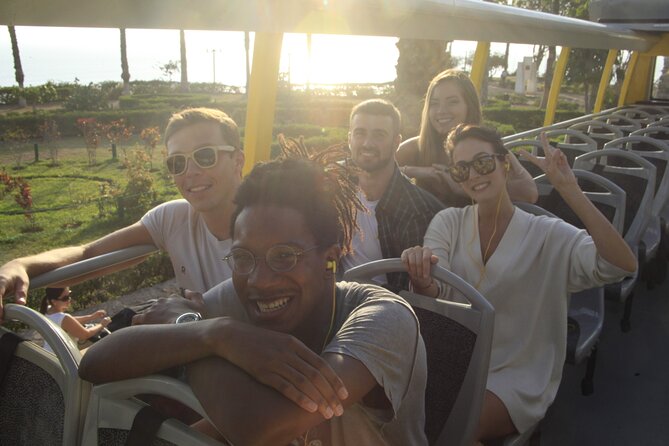
This is a bus tour with guided walking in the historic center. Several details show up in the on-the-ground experience: the bus is mostly for getting you between points, and the guided part comes when you’re on foot near the major sights.
Lima traffic is also real, and one review mentioned it as a reason the return to Miraflores can take longer than you want. That’s not a reason to skip the tour. It’s a reason to start with a flexible mindset.
A few practical tips so the day stays smooth:
- Choose a seat where you can hear the guide clearly. One review flagged a muffled bus mic, so don’t assume every seat gets the same audio.
- Stay close during the walking portions. One review mentioned a guide leaving someone behind, which is always a risk in city-center groups—your safest move is keeping track of where the main group is.
- Bring a snack or plan to buy something after. Snacks aren’t included.
What’s included (and how to judge the $35 value)
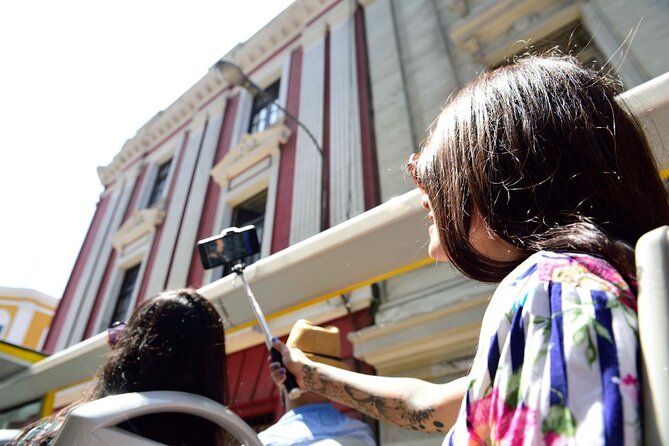
At $35 per person for about 4 hours, this tour looks like good value if you want structure. What you’re paying for isn’t just transportation—it’s guided interpretation at multiple major stops, plus comfort features that keep you from melting in the heat.
You get:
- Guided in the center of Lima
- Air-conditioned vehicle
- WiFi on board
- USB chargers for phones (in all seats)
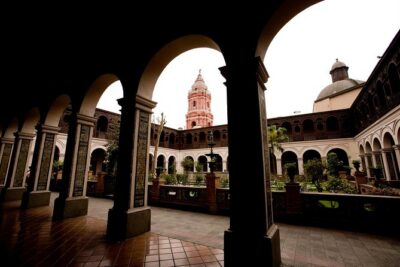
- Entrance to the convent of Santo Domingo
- All fees and taxes
What you don’t get:
- Snacks
- Pickup service
For many first-time visitors, the biggest win is that you don’t waste your limited time figuring out how to connect Miraflores to the historic core efficiently. Starting at Larcomar also reduces stress, since you’re already in a major tourist district with easy access to return options afterward.
Guides, language, and group energy: why it matters on this route
The quality of a guided city tour lives or dies on the guide. In the reviews, English-speaking guides got real praise, including names like Bryan and Yoanna (and another mention of Brian). When the guide can explain what you’re seeing clearly, the stops become more than checkboxes.
I’d aim for this tour if you want that “someone explains it to me while I walk” feeling. If you’re the type who enjoys asking quick questions, you’ll likely get more out of it here than on a pure hop-on hop-off loop.
If you’re sensitive to sound, sit where you can hear the mic. That’s the simplest way to avoid the one complaint that stands out.
Weather and timing: the small factor that affects a big day
This experience requires good weather. If the day is rainy or gloomy, the pacing and walking stops may feel less pleasant.
Time-wise, the tour is about 4 hours on average, and it’s commonly booked around 10 days in advance. That tells you two things: it’s popular, and it’s best to plan early if your schedule is tight.
Should you book this Lima panoramic bus tour from Larcomar?
Book it if:
- You want a structured introduction to Lima that combines Miraflores-to-Old-City viewpoints in one go.
- You care about understanding the stories behind Plaza de Armas, Lima Cathedral, and the Government Palace—not just taking photos.
- You like guided walking stops and appreciate comfort perks like WiFi and USB chargers.
Skip or rethink it if:
- You hate group pacing or you’re very hard of hearing in noisy vehicles. The route depends on listening during transit and during the guided portions.
- You’re arriving late in the day and traffic could push the experience past your comfort zone.
My call: for a first visit, this is a strong way to get your bearings. Larcomar sets the scene, Pucllana adds depth, and Plaza de Armas gives you the city’s power map in compact form. If you show up ready to walk, keep close in the group, and plan for traffic, it’s a tidy, high-value Lima afternoon.
FAQ
How long is the City Tour Panoramic Bus departing from Larcomar?
It’s listed at about 4 hours.
How much does the tour cost?
The price is $35.00 per person.
Where do I meet the tour?
You meet at the Turibus ticket redemption point at Larcomar, Mal. de la Reserva 610, Miraflores, Lima, Peru.
Is pickup included?
No. Pickup is not included.
What’s included in the price?
WiFi on board, all fees and taxes, an air-conditioned vehicle, guided time in the center of Lima, entrance to the convent of Santo Domingo, and USB chargers for phones.
What happens if the weather is bad?
The experience requires good weather. If it’s canceled due to poor weather, you’ll be offered a different date or a full refund. Free cancellation is available up to 24 hours in advance for a full refund.
More Tour Reviews in Lima
- Lima: Ultimate Peruvian Food Tour
★ 4.9 · 700 reviews - Full Day Paracas Ica and Huacachina from Lima All Included
★ 4.5 · 623 reviews - Lima’s Vibrant Heritage: Exploring the City’s Landmarks Half-day
★ 4.5 · 581 reviews - From Lima: Day trip to Paracas, Ica and Oasis Huacachina
★ 4.6 · 409 reviews - Private transfers from Lima Airport or to Lima Airport
★ 4.0 · 359 reviews
More of the Capital
- Lima’s Vibrant Heritage: Exploring the City’s Landmarks Half-day
★ 4.5 · 581 reviews - Lima: City Highlights Small Group Tour
★ 4.9 · 132 reviews - City Tour of Lima from the Airport
★ 4.5 · 84 reviews - Lima City Tour. Pre-Hispanic, Colonial and Modern Tour.
★ 5.0 · 74 reviews - The Original Highlights of Lima – Private Half Day Tour
★ 5.0 · 74 reviews
Miraflores and Barranco, Keep Going
- Lima: The Charm of Barranco & Pre Inca Pyramid in Miraflores
★ 4.9 · 322 reviews - Lima: Pachacamac Ruins & Barranco Half-Day Guided Tour
★ 4.6 · 296 reviews - QuickLlama: Door-to-door transfer from Lima Airport to Miraflores
★ 4.0 · 163 reviews - Lima Bike Tour Miraflores – Barranco + Huaca Pucllana!
★ 4.5 · 137 reviews - Lima Bike Tour in Miraflores & Barranco – Shared small group
★ 5.0 · 129 reviews
Fresh from our Lima notebook, a few recent write-ups




Lima City Sightseeing Tours, compared.
 ★ 4.5Lima’s Vibrant Heritage: Exploring the City’s Landmarks Half-dayFrom $39581 reviews
 ★ 4.9City Highlights Small Group TourFrom $79132 reviews
 ★ 4.5City Tour of Lima from the AirportFrom $9584 reviews
 ★ 5.0Lima City Tour. Pre-Hispanic, Colonial and Modern Tour.From $3574 reviews
 ★ 5.0The Original Highlights of Lima – Private Half Day TourFrom $13974 reviews
 ★ 4.5Lima City Tour from the Port of Callao For CruisesFrom $8567 reviews
 ★ 5.0Lima FD Experience Pachacamac, Barranco, City Centre & Water ParkFrom $15564 reviews
 ★ 4.5Lima in a Day: City Sightseeing Tour, Larco Museum and Magic Water CircuitFrom $25763 reviews
Browse the lists this tour appears in