
Reviewed · MULTI-DAY PERU TRIPS FROM LIMA
8-Day Peru Ancestral Energies
A first taste of Peru’s sacred places starts fast. This 8-Day Peru Ancestral Energies trip strings together Lima history, high-Andes Inca ruins, Machu Picchu, and Lake Titicaca with a schedule built for efficient sightseeing and included logistics. I also like that it’s organized around small group tours (max 15 people) with an English-Spanish guide, so you’re not just getting taken places—you’re getting context as you go.
Two standout things I really like are the day-by-day structure (it reduces decision fatigue) and the mix of sites that connect daily life to belief systems, from gold artifacts in Lima to Inca stonework around Cusco. One consideration: the plan moves at a steady pace and includes high elevations, so you’ll want to take altitude seriously and plan your Lima-to-Cusco timing carefully.
In This Review
- Key Things That Make This Tour Worth Your Time
- First Impressions: How This Schedule Feels in Real Life
- Lima’s Historical Center and the Larco Museum: Gold, Stone, and Catholic-City Layers
- Cusco Arrival Day: Markets, Qorikancha, and Stonework You Can Actually Point At
- Breaking the Crowds: Sacsayhuamán, Q’enqo, Puca Pucará, and Tambomachay
- Sacred Valley Day: Chinchero Weaving, Moray Microclimates, and Ollantaytambo’s Living Stone
- Machu Picchu With Train + Bus: The Logistics That Make It Easier
- Puno Route: Andahuaylillas Chapel Art, Racchi, and the La Raya Water Divide
- Lake Titicaca Day: Uros Islands and Taquile’s Quechua Traditions
- Price and Logistics: Is $1,264 Good Value Here?
- Who This Tour Fits Best (and Who Might Want to Adjust)
- A Quick Note on Altitude and Timing That Actually Matters
- Should You Book Peru Ancestral Energies?
- FAQ
- FAQ
- What cities does the tour include, and where does it start and end?
- How long is the Peru Ancestral Energies tour?
- What’s included in the price?
- What’s not included?
- Does the Machu Picchu ticket allow changes or refunds?
- How do Machu Picchu visitor circuits work on this tour?
- What time should I fly from Lima to Cusco?
- What does the tour say about altitude sickness?
- How big is the group, and what language are the tours?
- Can I cancel for a full refund?
Key Things That Make This Tour Worth Your Time
- All-in-one logistics: airport transfers, train timing, and admissions are bundled so you’re not piecing things together.
- Small group pace (up to 15 people): easier questions, less waiting around, and a more human feel.
- Machu Picchu includes the big moving parts: train, bus ascent, and planned return are handled.
- Sacred Valley in the middle of the trip: you get Chinchero, Moray, and Ollantaytambo before the Machu Picchu rush.
- Lake Titicaca with real communities: Uros islands and Taquile come with local culture and music.
- English-Spanish guide support: you’ll get explanations across most stops, not just transport.
First Impressions: How This Schedule Feels in Real Life
This is a compact circuit. You start in Lima and end at Juliaca Airport (about 36 km from Puno), then work your way through Cusco, the Sacred Valley, Machu Picchu, and Lake Titicaca before heading out. The value here is not just seeing famous places—it’s how the order reduces travel hassle and keeps days structured.
The tour also leans into guided time. Each day has specific stops with admissions and a guide who explains what you’re looking at. That matters in Peru because so many places look similar at first glance—until someone points out what’s ceremonial, what’s defensive, and what’s built around the land.
The small-group cap (up to 15 people) is another practical plus. In big groups, you spend energy waiting. Here, the flow is tighter, and it’s easier to ask questions when you have them.
More multi-day loops out to Cusco and beyond
Lima’s Historical Center and the Larco Museum: Gold, Stone, and Catholic-City Layers
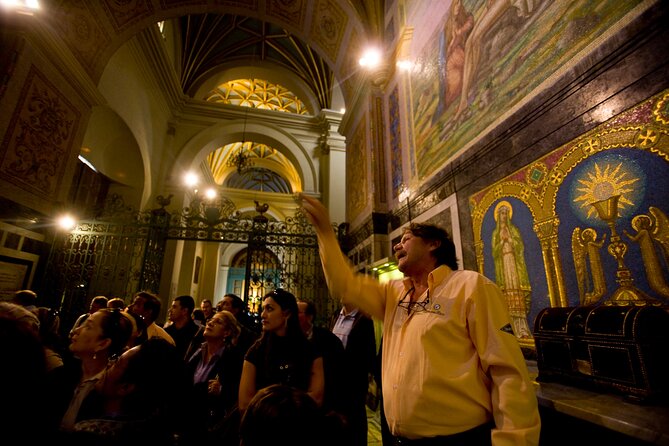
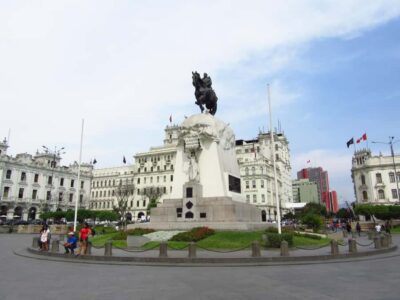
If you land and immediately want to understand how Lima grew into a colonial capital, this first day does the job. After your airport transfer, you get a guided pass through the Historical Center, including the Convent of Santo Domingo and Universidad Mayor de San Marcos, plus the civic core around Plaza Mayor. You’ll see major power landmarks like the Government Palace, the Municipality, and the Cathedral of Lima.
Then the day pivots to the Larco Museum, which is a smart pairing with the city tour. The contrast is clear: Lima’s colonial architecture sits above much older cultural foundations. At Larco, you’ll look at collections of gold artifacts, textiles, and ceramics, which is a great way to reset your brain after hours of street-level history.
Practical tip: plan for walking time. Even with a structured itinerary, the Historical Center is a city on foot, and you’ll want comfortable shoes for uneven sidewalks.
Cusco Arrival Day: Markets, Qorikancha, and Stonework You Can Actually Point At
Cusco can feel like sensory overload when you first arrive. This afternoon plan helps you get oriented without jumping straight into the hardest climbs.
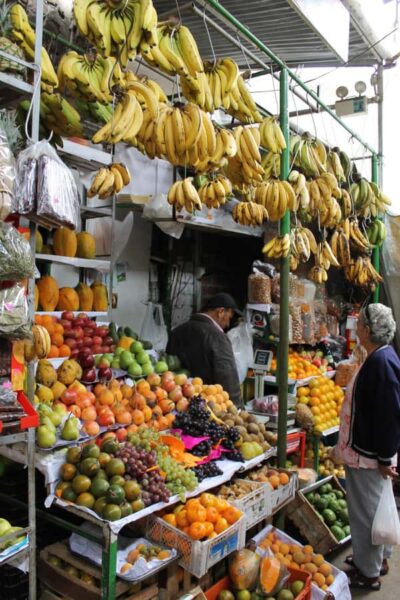
You start with a panoramic overview from Plaza de San Cristóbal, then head to the San Pedro Market, where you can sample local flavors and see what people actually buy day to day. I like market time early in a trip because it makes later food references make sense, and it’s a more authentic way to experience Cusco than only chasing viewpoints.
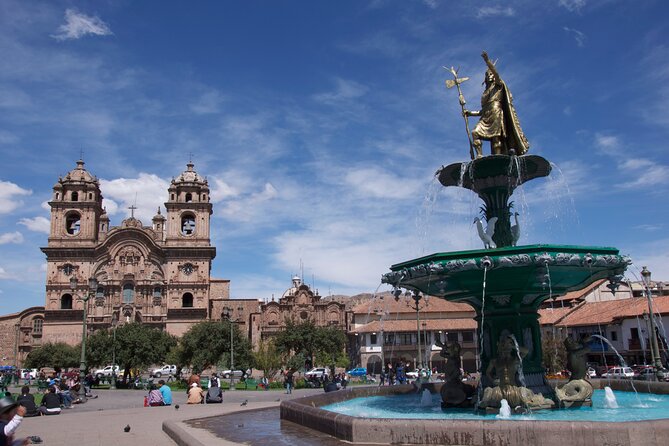
From there, you move into the sacred center: Qorikancha (Temple of the Sun). The walls that once held gold are a powerful reminder that this wasn’t just a place of worship—it was a place of wealth, engineering, and power. Next you walk through the artisan area around San Blas, down Hatun Rumiyoc, and you’ll spot historic Inca and colonial layers close together, including the Twelve Angled Stone.
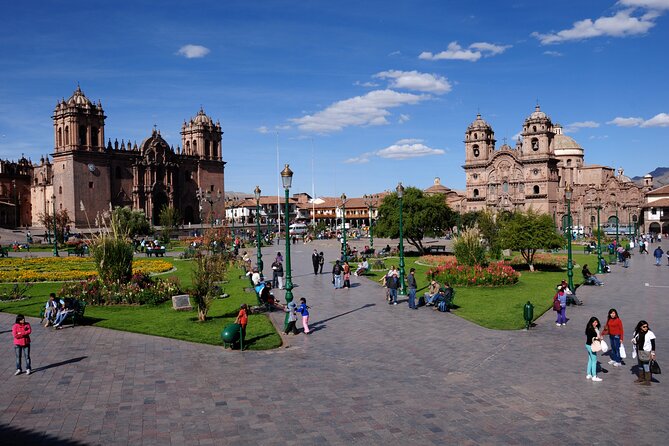
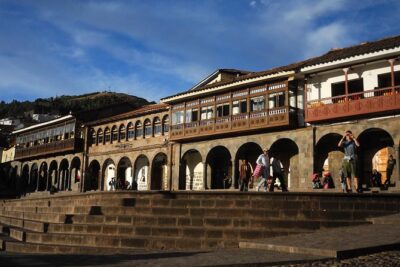
Ending at Plaza de Armas with a cathedral visit gives you the colonial anchor after the Inca anchors. It’s an effective double lesson: you learn how power changed hands here, and you see how stone survived even when rulers did not.
Breaking the Crowds: Sacsayhuamán, Q’enqo, Puca Pucará, and Tambomachay
Day 3 is designed for a calmer feel. You head to Sacsayhuamán early enough to avoid the densest crowds, which makes a difference. This citadel is impressive in scale, but it’s also impressive in how it sits within the surrounding terrain—so you get a sense of how the Inca worked with the land instead of only against it.
You then continue to Q’enqo, where the altar area is embedded into rocky formations. The point isn’t just the rocks—it’s how ritual space was shaped into the geography.
After that come Puca Pucará (a lookout) and Tambomachay, described as architecturally notable and tied to Andean cosmology. You’ll also get a free afternoon in Cusco, which is underrated. A little breathing room helps with altitude adjustment and lets you wander on your own—especially useful when you want to revisit a street or shop you liked the first time.
- Lima: Ultimate Peruvian Food Tour★ 4.9 · 700 reviews
- Full Day Paracas Ica and Huacachina from Lima All Included★ 4.5 · 623 reviews
- From Lima: Day trip to Paracas, Ica and Oasis Huacachina★ 4.6 · 409 reviews
- Private transfers from Lima Airport or to Lima Airport★ 4.0 · 359 reviews
Sacred Valley Day: Chinchero Weaving, Moray Microclimates, and Ollantaytambo’s Living Stone
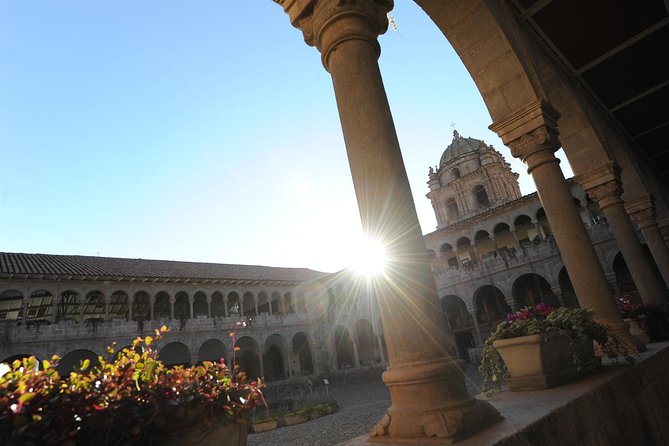
This is one of the days where the tour feels most like a story. It’s not only ruins. It’s also people and practice.
You depart toward Chinchero, known for its colorful character and weaving women. A short stop at a textiles center is valuable because it connects the fabric you might see later in shops to older methods, including spinning and dyeing techniques using alpaca wool.
You also visit an Inca plaza with a colonial church—another recurring theme in Peru: new structures built over old landscapes, sometimes respectfully, sometimes opportunistically.
Next up is Moray, with its concentric agricultural terraces. The big idea here is that terraces acted like a lab for microclimates. If you like learning how ancient systems worked, this is the kind of site that rewards attention.
After lunch, you head to Ollantaytambo, described as the last living village of the Incas. You’ll visit the Temple of the Ten Windows, the Bath of the Princess, and the Sun Temple. Ollantaytambo is especially memorable when you realize it’s still part of daily life, not just an empty stage set.
You’ll spend the night in the Sacred Valley area, which is practical. It sets you up for the next morning’s Machu Picchu transit without rushing.
Machu Picchu With Train + Bus: The Logistics That Make It Easier
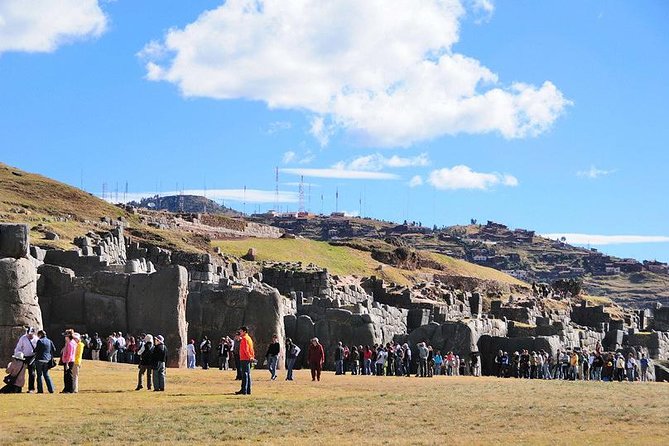
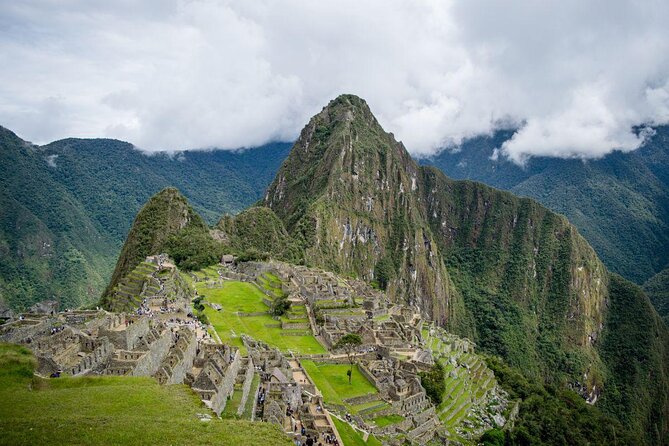
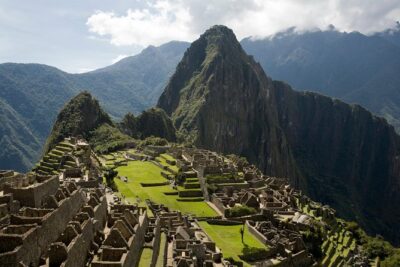
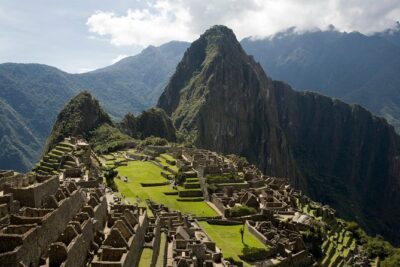
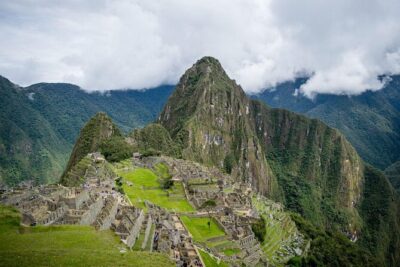
Machu Picchu is the headline. What matters is how you get there. This trip handles the hard parts: you board at Ollantaytambo station, take the train to Machu Picchu station, then use staff assistance to board the bus up the winding road. You’ll ride with views over the Urubamba River canyon, which is a scenic warm-up before the main reveal.
Once you arrive, you get time at Machu Picchu to walk its terraces, staircases, ceremonial areas, and urban sectors. The feeling here is less about one single photo moment and more about how the whole city is arranged in layers—your eye keeps finding new sightlines and angles.
Lunch is included, and then you return by train and transfer back to your hotel in Cusco. The back-and-forth matters: it reduces the chance you’ll scramble for timing on the day you’re most excited (and most likely to feel the altitude).
One important detail to know before you go: Machu Picchu uses visitor circuits with different routes. This tour gives priority to circuit route 2. If it isn’t available, the options of circuit 3B or circuit 1B are communicated so you can confirm before tickets are issued. Also, the Machu Picchu ticket is not refundable, and date changes aren’t accepted, meaning you should lock in your schedule early and protect your plans.
Puno Route: Andahuaylillas Chapel Art, Racchi, and the La Raya Water Divide
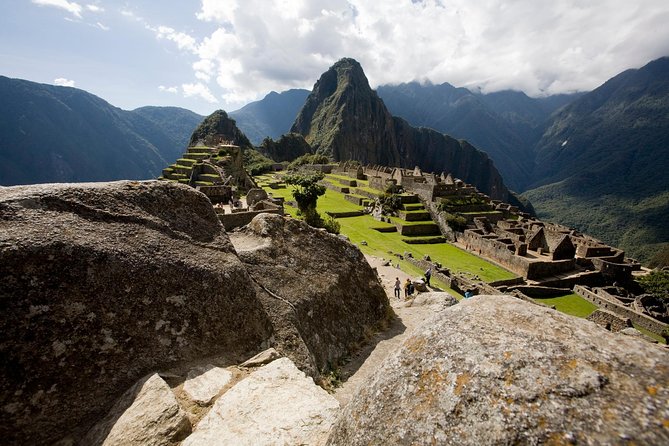
The day heading toward Puno is a long one, but it’s packed with stops that break up the bus ride.
You’ll travel by tourist bus along the Vilcanota River, then continue across the Altiplano (Collao plateau). You stop at Andahuaylillas, where the Church of the Apostle St. Peter is known as La Sixtina de América. The reason to care is simple: the walls and ceiling have 17th-century mural paintings. It’s an art stop that also shows how Andean regions adopted and reshaped religious space during colonial times.
Next is Racchi, at the Temple of the God Wiracocha, where you can see the remains of major columns and walls. The tour positions it as monumental in Inca times, and seeing that scale helps you understand why these sites weren’t only local—they were designed to signal power and belief across distances.
You also reach the highest point at La Raya (4,800 meters), noted for the division of waters: the Titicaca basin rivers versus those heading toward the Amazonas. That’s a rare moment where the trip connects geography, hydrology, and cosmology in one spot.
After lunch, you visit the Site Museum of Pucará, tied to the famous toritos de Pucará. Then you arrive in Puno and transfer to your hotel.
Practical note: if you’re prone to altitude headaches, this day can be tough because you hit higher elevation points while also spending time traveling. Take it slow at each stop.
Lake Titicaca Day: Uros Islands and Taquile’s Quechua Traditions
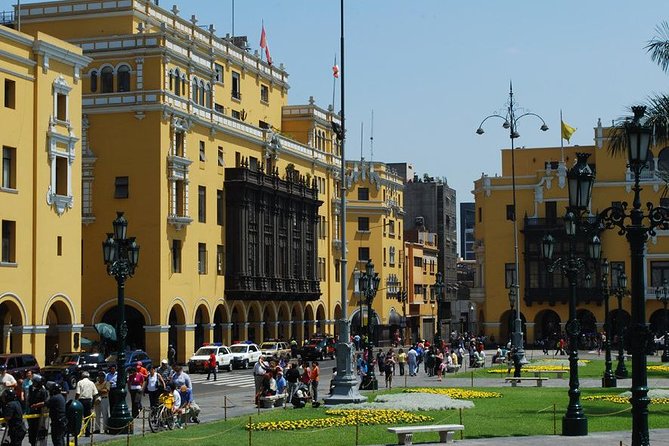
This is a full-on cultural water day. You start with a motorboat trip to the Uros, a community that historically sought refuge by living on islands in Lake Titicaca. The tour emphasizes how they build and maintain the islands using ancient techniques and how they share that knowledge with visitors.
Then you continue by boat to Taquile Island, where you’ll meet a community that has kept traditions, clothing, and ways of life alive. One of the more interesting angles here is linguistic and cultural overlap: the tour notes Taquile as Quechua, in a region that is essentially Aymara. You’ll also enjoy music and dances, which is often the moment where a long travel day finally feels like a real reward.
Lunch is served at a community restaurant. It’s described as simple but rich in nutrients, which is exactly what you want on a lake day—you need energy, not a fancy distraction.
After lunch you walk around the island areas for views over Lake Titicaca, then return to Puno and transfer to your hotel.
If you’re hoping for total comfort, bring a light layer. Boat days can get breezy, and that’s even when the weather looks calm from shore.
Price and Logistics: Is $1,264 Good Value Here?
At $1,264 per person for an 8-day circuit, this isn’t a budget backpack route, and it’s not meant to be. The value comes from packing together the stuff that usually costs time and money in your own planning:
- Airport transfers and inter-city transport
- Round-trip train to Machu Picchu according to your selected hotel category
- 7 nights of accommodation
- Admissions included across the main stops
- Meals included: 7 breakfasts and 4 lunches
In other words, you’re paying for reduced friction. You’re not just buying entrances to famous sites. You’re buying a schedule that handles the train day, the Sacred Valley-to-Machu Picchu rhythm, and the long travel blocks into manageable segments.
Also consider group size. With a maximum of 15 people, your per-person cost can make sense because it supports better coordination—especially on days with multiple stops.
The main add-ons you should plan for are flights. The tour does not include the Lima to Cusco and Juliaca to Lima flights. It also lists $32 per person for airport taxes (including Lima–Cusco and Puno, and international airport taxes).
Who This Tour Fits Best (and Who Might Want to Adjust)
This tour suits you if:
- You want a structured route that moves through Peru’s headline regions without building an itinerary from scratch.
- You care about context at the sites, not only photos.
- You’re comfortable sharing guided time in a group of up to 15 people.
You might reconsider or adjust expectations if:
- You strongly prefer long free afternoons every day. This trip gives some open time (like in Cusco), but most days are planned.
- You’re very sensitive to altitude and want extra downtime beyond what’s scheduled. The tour includes practical altitude advice, but your body decides the pace.
A Quick Note on Altitude and Timing That Actually Matters
Altitude is not just a warning here. You’re moving through high places in Cusco and the Andes, and the itinerary explicitly mentions altitude sickness precautions—bring medicine or ask your doctor before you travel. That’s smart.
Timing matters too for flights. When booking your flight from Lima to Cusco, it needs to be in the morning, and arrival by noon is too late. Since the tour begins at Lima’s airport and then ties into Cusco arrival, this isn’t a small detail.
Should You Book Peru Ancestral Energies?
I’d book this if you want Peru’s big spiritual and historical highlights in one organized package, with included admissions, transport, and a guided explanation at most stops. The best reasons to choose it are practical: small-group size, organized movement between regions, and the way the trip connects Inca sites, colonial layers, and Lake Titicaca communities into one coherent arc.
I’d pause if your schedule is fragile, because Machu Picchu requires you to commit to a visit date (tickets aren’t refundable and date changes aren’t accepted). Also, if altitude is a major concern for you, you’ll want to plan carefully and be honest with yourself about how much elevation travel you can handle.
FAQ
FAQ
What cities does the tour include, and where does it start and end?
It starts at J Chavez Intl Airport in Lima, Peru and ends at Inca Manco Capac International Airport in Juliaca, Peru (about 36 km from Puno).
How long is the Peru Ancestral Energies tour?
The tour is 8 days.
What’s included in the price?
Included are airport-to-hotel transfers, shared transfer to the train station, all admission tickets on tours, shared tours with an English-Spanish speaking guide, round trip railway ticket to Machu Picchu (based on selected hotel category), 7 nights of accommodation, plus 7 breakfasts and 4 lunches.
What’s not included?
The tour does not include flights (notably Lima to Cusco and Juliaca to Lima), and it also notes $32 per person for airport taxes (including Lima–Cusco and Puno, plus international airport taxes). Food and drinks are not included unless specified.
Does the Machu Picchu ticket allow changes or refunds?
No. The Machu Picchu admission ticket is not refundable, and date changes or amendments are not accepted. If you need a different date, you would need a new entrance ticket.
How do Machu Picchu visitor circuits work on this tour?
The tour prioritizes circuit route 2. If that isn’t available, circuit 3B or circuit 1B will be offered so you can confirm your decision before tickets are issued.
What time should I fly from Lima to Cusco?
Your Lima to Cusco flight should be in the morning. The guidance says arrival by noon is too late.
What does the tour say about altitude sickness?
If you suffer from altitude sickness, the tour advises bringing medicine or asking your doctor for advice before you depart.
How big is the group, and what language are the tours?
The group is limited to a maximum of 15 travelers. Tours are provided with an English-Spanish speaking guide.
Can I cancel for a full refund?
Yes. Cancellation is free up to 24 hours before the experience’s start time for a full refund. If you cancel less than 24 hours before, you won’t receive a refund.
More Tour Reviews in Lima
- Lima: Ultimate Peruvian Food Tour
★ 4.9 · 700 reviews - Full Day Paracas Ica and Huacachina from Lima All Included
★ 4.5 · 623 reviews - Lima’s Vibrant Heritage: Exploring the City’s Landmarks Half-day
★ 4.5 · 581 reviews - From Lima: Day trip to Paracas, Ica and Oasis Huacachina
★ 4.6 · 409 reviews - Private transfers from Lima Airport or to Lima Airport
★ 4.0 · 359 reviews
More Multi-Day Peru
- 8-Days Best of The Inca Empire from Lima
★ 5.0 · 114 reviews - 7 Day Peru Private Journey
★ 5.0 · 71 reviews - 10-Day Taste Peru Experience: Lima, Nasca, Cusco & Machu Picchu
★ 5.0 · 63 reviews - 7 Days: Lima, Ica, Cusco & Machupicchu with local flights
★ 5.0 · 52 reviews - 8-Days Peru, The Rise of the Inca Empire
★ 5.0 · 49 reviews
Fresh from our Lima notebook, a few recent write-ups

Multi-Day Peru Trips from Lima, compared.
 ★ 5.08-Days Best of The Inca Empire from LimaFrom $1,454114 reviews
 ★ 5.07 Day Peru Private JourneyFrom $1,63071 reviews
 ★ 5.010-Day Taste Peru Experience: Lima, Nasca, Cusco & Machu PicchuFrom $2,00563 reviews
 ★ 5.07 Days: Lima, Ica, Cusco & Machupicchu with local flightsFrom $2,59952 reviews
 ★ 5.08-Days Peru, The Rise of the Inca EmpireFrom $1,28049 reviews
 ★ 5.08-Day Enigmas of PeruFrom $1,54149 reviews
 ★ 5.0Machu Picchu, Cusco & Lima 7-Day TourFrom $1,31130 reviews
 ★ 4.44 Day from Lima: Nazca Lines Flight, Paracas, and HuacachinaFrom $2995 reviews
Browse the lists this tour appears in